Welcome to First Grade!
In our class, we become a community of learners. Students will learn to work together throughout the year, and I place a strong emphasis on teamwork and collaboration. Cottage school provides a unique opportunity for homeschool students to develop important social skills and learn how to engage with their peers in a supportive, collaborative environment.
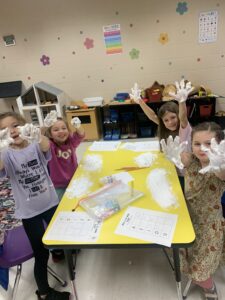
I believe in the power of hands-on and movement-based learning, where students are actively engaged and can physically interact with what they are learning. I also incorporate project-based learning experiences that allow students to explore topics deeply through creativity, collaboration, critical thinking, and real-world problem solving. I provide the tools and accommodations needed for each student to approach every lesson with confidence. My goal is to support each student’s growth by helping them recognize their unique strengths and value. By creating a safe, inclusive environment where students can interact, share ideas, and learn together, I strive to foster a love of learning and give them the tools they need to grow both as individuals and as curious learners.
Each week in our class, we explore a new unit theme that sparks curiosity and excitement. In the past, we’ve explored themes like dinosaurs, weather, the human body, arctic animals, building, the solar system, and many more based on the interests of the students. Our daily schedule is designed to balance foundational academic skill practice with engaging, theme-based enrichment activities and structured play breaks throughout the day.
A Sample Day in the First Grade Classroom
Our day begins with a calm and welcoming Arrival period. As students enter the classroom, they’ll find a simple activity waiting at their tables—this could be playdough, building blocks, a coloring sheet, or even an ongoing project from the previous week. These quiet, engaging tasks are completely optional and help ease students into the day as we wait for everyone to arrive.
We then move into our Morning Meeting, where students gather to share highlights from their week, participate in calendar time, and talk about the day’s theme. This time sets the tone for a connected and thoughtful day of learning. Next, students participate in a movement activity, which may take place in the gym or through a group game in the classroom. This active break helps students get their bodies moving and minds ready to focus.
The academic portion of our morning begins with a read-aloud and comprehension-based discussion connected to our weekly theme. Throughout the morning, students participate in engaging learning activities that practice foundational skills they are already familiar with in math, reading, writing, and literacy. These activities are designed to be interactive, hands-on, collaborative, and often project-based, allowing students to strengthen important academic skills while building confidence, independence, and teamwork skills.
After lunch, students participate in themed enrichment activities that may include dramatic play centers, science experiments, music, art, STEM challenges, and other creative hands-on experiences connected to our weekly unit. Many of these activities are completed through collaborative projects that encourage curiosity, problem-solving, creativity, and meaningful peer interaction while helping students make deeper connections through play and exploration.
Before the day ends, students participate in Classroom Jobs. We close our day with a reflective Afternoon Meeting. The teacher poses an exit question, and students have the chance to share a compliment with a peer or talk about their favorite part of the day, ending things on a kind and thoughtful note.